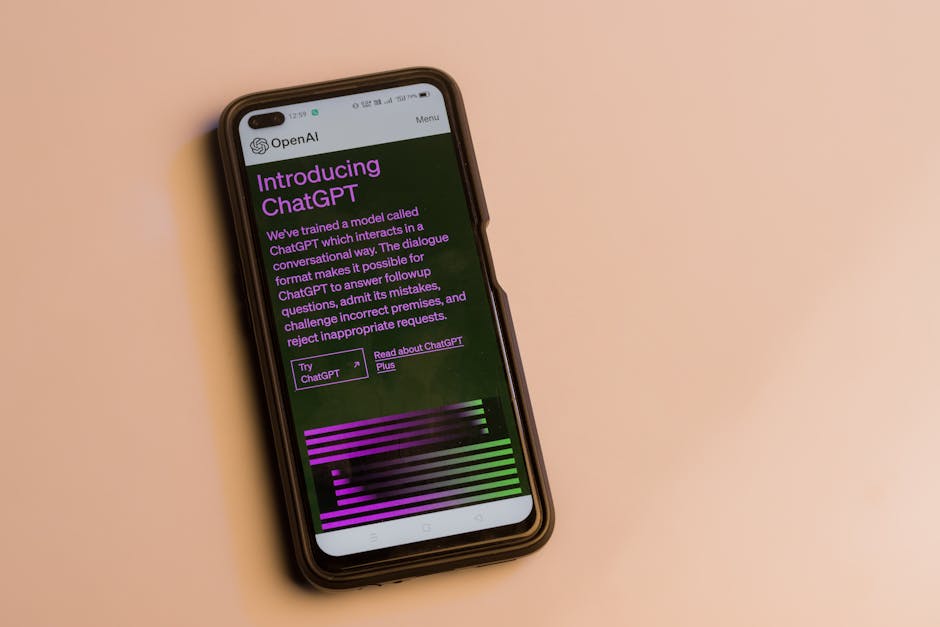
OpenAI’s latest release, GPT-5.5, is being hailed as a game-changer. The company claims it’s their most advanced AI model yet, and that’s not just tech jargon. This model is designed to be a versatile powerhouse, capable of revolutionizing everything from coding to complex scientific research.
Greg Brockman, OpenAI’s co-founder and president, explained during a press call that GPT-5.5 marks a significant leap forward towards creating an all-encompassing “super app.” You might ask yourself, “What is a super app?” It’s a single platform that combines various services like coding assistance, knowledge work, and more under one umbrella. Imagine having a digital Swiss Army knife that can handle your queries, manage your projects, and even assist in creative endeavors—all in one place.
But what really sets GPT-5.5 apart from its predecessors? According to OpenAI, it boasts enhanced capabilities across a multitude of categories. Whether you’re tackling enterprise-level coding tasks or diving into experimental AI applications, this model promises to deliver better performance. Early benchmarks suggest GPT-5.5 consistently outshines not only older versions of OpenAI’s models but also its competitors like Google’s Gemini 3.1 Pro and Anthropic’s Claude Opus 4.5.
User reactions have already begun pouring in, and they’re mixed, but mostly positive. Many are excited about the potential of this model to streamline workflows and reduce repetitive tasks. However, some have raised concerns about its capacity to truly replace human expertise in specialized fields. It’s a valid point. While AI is powerful, it hasn’t entirely outsmarted human intuition and creativity—yet.
What’s the practical impact of GPT-5.5 for everyday users? Well, if you’re a developer, it could significantly speed up your coding process. For researchers, it might become an invaluable tool for crunching data and generating insights. The idea that a single app could cater to multiple needs is undeniably appealing, but we should also be cautious. Will this lead to over-reliance on AI for complex decision-making?
Brockman’s vision for a super app is ambitious. It aims to unify ChatGPT, Codex, and an AI-powered browser into one seamless experience. This is not just about convenience; it’s about transforming how we interact with technology. But the ambition isn’t without its critics. Some analysts warn that creating a one-size-fits-all app could lead to issues of data privacy, security, and even ethical implications in AI decision-making processes.
The buzz around super apps isn’t limited to OpenAI. Elon Musk has also expressed interest in transforming X (formerly Twitter) into a similar kind of platform. This raises an interesting question: Are we headed towards a future dominated by super apps? The implications are huge. If one platform can cater to everything from social networking to coding assistance, where does that leave specialized services?
There’s no denying that GPT-5.5 is a step closer to that future. OpenAI’s performance benchmarks indicate that they are not just keeping pace with competitors; they are setting the bar higher. The question remains: Can they maintain that lead? As the market becomes increasingly crowded with AI tools, staying ahead won’t be easy.
Users and developers alike are eager to experiment with this new model. While the excitement is palpable, it’s essential to approach these advancements with a critical eye. Are we ready to fully trust an AI with tasks that require nuanced understanding and human empathy?
With GPT-5.5, OpenAI isn’t just releasing another model; they’re potentially redefining the future of digital interaction. What would you want from a super app? Would you trust it to handle your complex needs or would you prefer to keep your tech tools compartmentalized?
💬 Join the Conversation