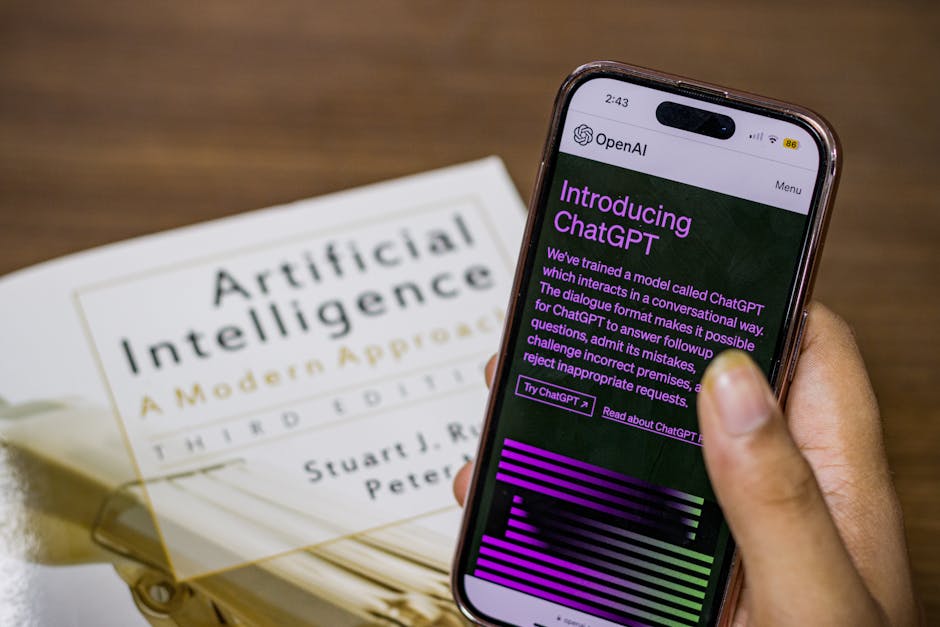
OpenAI has officially released GPT-5, touting it as the AI chatbot that can deliver PhD-level expertise. That’s a bold claim, and you might be wondering: can a chatbot really reach that level of intellectual capacity?
Sam Altman, OpenAI’s co-founder and CEO, believes we’re on the brink of something revolutionary. He claims GPT-5 is “smarter, faster, and more useful,” while also suggesting that this model represents a significant leap toward Artificial General Intelligence (AGI). If true, this could have profound implications for various fields, from education to healthcare.
What sets GPT-5 apart? OpenAI has focused on enhancing its reasoning capabilities, which means the chatbot is now more adept at problem-solving. This isn’t just a bells-and-whistles upgrade—it’s a fundamental evolution. Early user feedback indicates that while the interface remains familiar, the depth and accuracy of responses have seen noticeable improvements.
For coders, GPT-5 is being marketed as a highly proficient assistant, capable of writing complex code almost instantly. Is this the AI partner you’ve been waiting for, or just another overhyped tool in a saturated market? Opinions are mixed. Some users are thrilled by the productivity boost, while others question whether any AI can truly replace human intuition and creativity in coding tasks.
One of the glaring issues in previous models has been the phenomenon of “hallucinations,” where AI generates convincing but entirely inaccurate information. OpenAI claims GPT-5 suffers from this problem less often, which is a welcome change. But let’s face it: even with these improvements, skepticism remains prevalent. Users are rightfully cautious about placing too much trust in AI systems, especially when mistakes could have serious real-world consequences.
Critics have pointed out that while GPT-5 might excel at tasks that mimic PhD-level work, it still lacks the emotional intelligence and nuanced understanding that come with human experience. For instance, during its launch, Altman showcased GPT-5’s capability to write a nuanced eulogy. Yet, can a machine truly grasp the complexity of human grief? Users remain divided on whether AI can genuinely understand emotions or if it merely simulates responses.
OpenAI also highlighted that GPT-5 feels “more human,” a claim that’s both enticing and concerning. Are we on the verge of creating machines that can emulate human emotions convincingly, or is this simply a clever marketing strategy? We’re already seeing growing concerns about the ethical implications of AI that can mimic human interaction so closely.
The implications for commercial enterprises are substantial. GPT-5’s ability to generate code and content at lightning speed means that businesses might reconsider how they employ human workers versus AI tools. This raises an important question: how will we adapt to a workforce that may soon include AI as a competent collaborator or competitor? The tension between efficiency and employment is a topic that’s only going to grow in importance.
As the competition heats up, OpenAI isn’t the only player making claims about superior AI capabilities. Elon Musk’s Grok, for instance, has made some pretty audacious assertions about its own prowess. This racing narrative has created a chaotic environment where users are left wondering which tool truly offers the best functionality.
The overall landscape of AI is shifting rapidly, shaped by massive investments from tech giants. With hundreds of billions already poured into AI and projections soaring into the trillions, we’re witnessing a technological arms race. As more sophisticated and “agentic” AI tools emerge, the ethical concerns surrounding them will undoubtedly grow more complex.
Here’s my bold prediction: as AI models like GPT-5 evolve, we’re headed toward a future where the line between human and machine intelligence blurs significantly. Will we embrace these advancements, or will we push back against what we perceive as a loss of the human touch?
How do you see AI evolving in the coming years? Will GPT-5 be the standard for AI chatbots, or just another step on a long road to something even more transformative?
💬 Join the Conversation