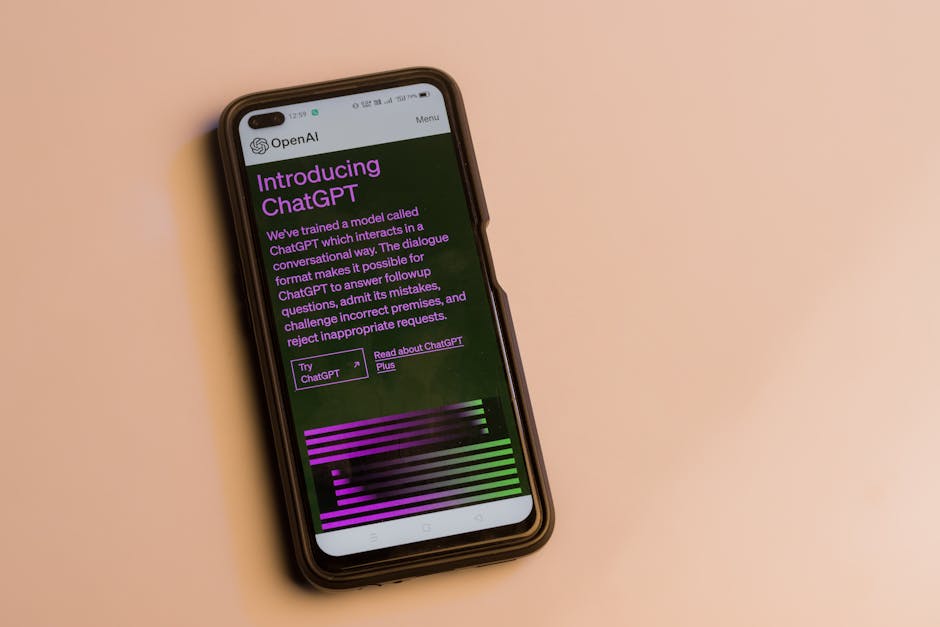
OpenAI just dropped a bombshell with the release of GPT-5.5, claiming it’s not just an upgrade but a pivotal step toward crafting an AI “super app.” This is no ordinary launch; it’s about exponential leaps in capabilities that could reshape how we interact with technology. As someone who dives deep into AI daily, I can’t help but feel electrified — and a bit skeptical — about what this means for the future.
Let’s break it down. The new model reportedly excels in areas like coding, knowledge work, and even dives into complex fields like mathematics and scientific research. Greg Brockman, OpenAI’s co-founder and president, has dubbed this version the “smartest and most intuitive,” which sounds ambitious, right? User reactions to previous iterations have been mixed, with some praising their utility while others question the limitations, particularly in nuanced tasks. So, does GPT-5.5 truly transcend those boundaries?
We often hear the term “super app” thrown around casually. Brockman envisions combining the functionalities of ChatGPT, Codex, and an AI browser into a single powerhouse tool. This could streamline tasks that usually require multiple apps, making everything from project management to coding feel seamless. Users have expressed a desire for a more integrated AI experience, so this vision, if executed well, could be groundbreaking. But can it live up to that hype?
One of the standout features of GPT-5.5 is its performance on various benchmarks compared to its predecessors and competitors like Google’s Gemini 3.1 Pro and Anthropic’s Claude Opus 4.5. OpenAI claims that 5.5 consistently outperforms these models, which is a significant statement. The benchmark tests are crucial in illustrating how well these algorithms can tackle real-world tasks, and users have noted that previous models sometimes fell short in accuracy and relevancy. Will GPT-5.5 change the game here, or is it just another promising release that struggles under pressure?
The idea of a “super app” is also gaining traction in other tech spaces, with Elon Musk eyeing a similar ambition for X. It raises the question: what does it mean for competition? A saturated market often leads to innovation, but it can also lead to confusion for users who are trying to determine which tool best meets their needs. Are we heading toward a battle of features among AI giants, or will this lead to a consolidation of tools into one user-friendly interface?
There’s also the aspect of accessibility. While the potential for a singular, powerful tool is appealing, we have to consider who gets to use it. Will GPT-5.5 be priced out of reach for smaller businesses or individual users? User feedback often highlights frustrations with the cost of AI tools relative to their utility. If OpenAI wants to win hearts and minds, they need to keep accessibility in focus while rolling out new features.
OpenAI’s partnerships, including collaborations with companies like Infosys, hint at a push to make these advanced tools available for broader enterprise use. The integration of AI across various sectors can lead to efficiency gains and creativity but will need dedicated support to ensure users can fully leverage these advancements.
As we look ahead, I can’t help but predict that we’re on the cusp of a major shift. The trajectory suggests we’re inching closer to a world where AI tools are indispensable across industries, radically reshaping workflows. It’s a tantalizing prospect, yet it comes with the caveat of potential over-dependence on AI.
If OpenAI’s GPT-5.5 can deliver on its promises, we might just see a future where AI is seamlessly integrated into every aspect of our everyday lives — at work, home, and beyond. But will it truly be the transformative force Brockman envisions, or just another step in the long, winding journey of AI development?
What do you think? Are we ready for the AI super app era, or is this just another case of “too good to be true”?
💬 Join the Conversation