
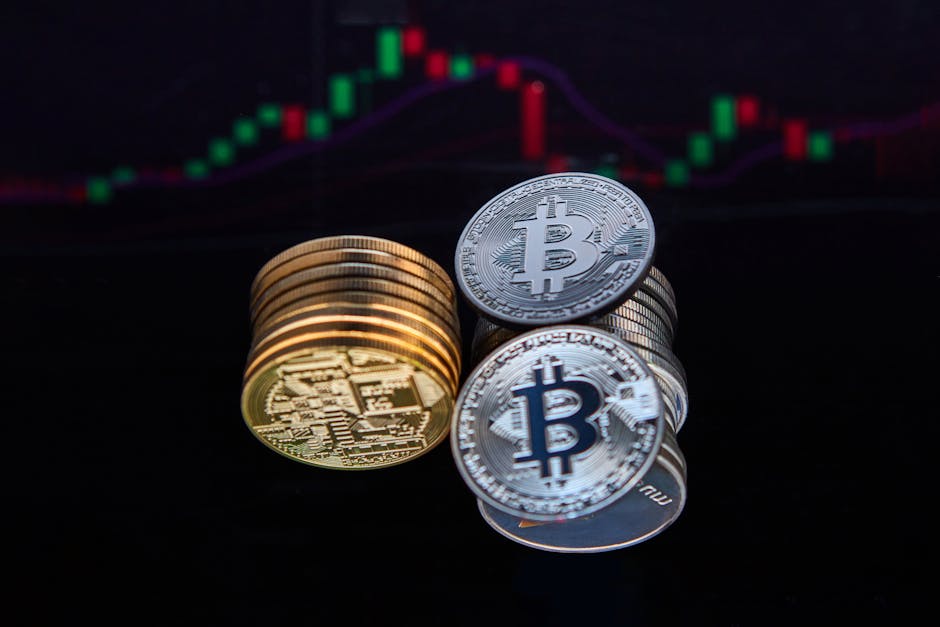
Bitcoin’s price recently surged over 3%, climbing to around $70,700 after President Donald Trump announced “productive conversations” between the U.S. and Iran. This unexpected geopolitical development is stirring hopes for reduced tensions in the Middle East, which historically impact global markets, including cryptocurrencies. For regular investors, understanding these connections can be crucial for navigating the volatile crypto landscape.
The recent spike in Bitcoin’s price, which follows a dip to around $67,600, reflects the crypto’s sensitivity to external news. When Trump disclosed that the U.S. would delay potential military actions against Iranian oil facilities, optimism spread through the market. Short-term trading strategies often hinge on such news, and Bitcoin’s movement emphasizes its role as a barometer of broader investor sentiment.
In the broader cryptocurrency market, Bitcoin isn’t the only player making waves. Ethereum and Solana also saw gains of 3.7% and 3.5%, respectively. Meanwhile, Dogecoin edged up 3.2%. This performance showcases Bitcoin’s role as a leader while other altcoins capitalize on market momentum. Retail sentiment, however, shifted towards bearish for Bitcoin, indicating a cautious approach among investors. As a result, the crypto space remains a hotbed of opportunity, but also risk.
Looking ahead, analysts are optimistic about Bitcoin’s long-term price trajectory. Some are predicting it could hit $250,000 by 2026, buoyed by increasing liquidity and mainstream adoption. This prediction stems from historical trends where Bitcoin surged significantly following major liquidity expansions, such as during the COVID-19 pandemic, when it skyrocketed from lows of $3,000 to nearly $70,000. If we inflate that demand metric into today’s market, the potential upside becomes staggering.
The fear of inflation remains a constant concern, especially with energy prices rising sharply. As oil prices soared past $100 a barrel due to heightened tensions, the potential for inflation to spiral is real. A cautious Federal Reserve may keep interest rates elevated longer, dampening risk appetite across markets, including cryptocurrencies. This creates a paradox for Bitcoin traders: as inflation risks loom, Bitcoin often attracts investors looking for hedge opportunities.
Now, consider the implications for Wall Street traders and everyday investors alike. If you’re evaluating whether to dive into Bitcoin, think about how external factors affect its value. For instance, rising oil prices could lead to increased production costs, which may, in turn, impact Bitcoin mining expenses. If mining becomes less lucrative, we could see a slowdown in new Bitcoin production, which may stifle price growth.
With Bitcoin hovering around $70,000, we’re at a critical point. The market is responding to a combination of geopolitical stability and economic uncertainty. The upcoming industrial production data later this week could provide insights into the health of the manufacturing sector, affecting investor confidence. If production trends upward, it could alleviate some inflation fears, potentially leading to a more favorable environment for risk assets like Bitcoin.
As the market absorbs these developments, we might see Bitcoin reclaiming its highs. Speculation suggests even more conservative estimates place Bitcoin near $160,000 to $200,000 by the end of the current liquidity cycle. With models suggesting outlier projections reaching as high as $600,000, there’s considerable upside potential for those willing to ride the wave of volatility.
In the current landscape, it’s essential to remain aware of your position and adapt to shifting sentiments. With increased volatility expected following major events, our strategies may need to align closely with real-time market conditions. It’s a delicate dance between opportunity and risk, and understanding the broader economic implications can help you make better investment choices.
As we navigate this evolving market, one question remains: how will you position yourself in this unpredictable crypto landscape? The next few months could redefine your strategy, and it might be the perfect moment to reassess your approach. Could Bitcoin indeed break through to new heights, or are we on the brink of a harsher correction? Let’s discuss where you think Bitcoin is headed next!
💬 Join the Conversation