By 2026, the hype surrounding AI won’t just be whispers in tech circles; it will be a roaring reality. Evidence points to a seismic shift as artificial intelligence seamlessly integrates into our daily lives through smaller, deployable models. Talk about a game-changer! This isn’t just guesswork—companies are investing heavily, and the results are staggering.
Take Google’s TurboQuant, for instance.
Introduced at the International Conference on Learning Representations (ICLR) 2026, this groundbreaking algorithm tackles one of the largest hurdles in AI deployment: memory overhead. By significantly reducing the burdensome KV cache requirement, TurboQuant allows large models to perform more efficiently. It’s like upgrading from an old, clunky car to a sleek electric vehicle—less drag and more speed. Users are already buzzing about how this could lead to more efficient AI applications on smartphones and other devices, essentially bringing AI closer to the masses.
Nvidia is another titan in this arena, predicting an impressive $1 trillion in revenue from its AI chips by 2027. Jensen Huang, CEO of Nvidia, has his eye on the prize. The company has already committed $40 billion to equity AI deals this year. With chips like Blackwell and Rubin leading the charge, we can expect an arms race in AI hardware like never before. What’s more, this influx of capital could catalyze innovations we haven’t even imagined yet.
But with great power comes great responsibility.
Palo Alto Networks recently launched Prisma AIRS 3.0, a comprehensive AI security platform that manages the entire lifecycle of agentic AI. This is crucial because while organizations scramble to monitor what AI says, many lack visibility into what AI does autonomously. Imagine running a car without being able to see how it drives itself! This tool could make or break companies as they seek to adopt AI responsibly.
On the flip side, not every AI endeavor will succeed, as OpenAI’s recent closure of Sora demonstrates. After burning through a staggering $15 million per day and only managing to generate $2.1 million, OpenAI had to pull the plug. Despite an initial surge in popularity, the app quickly fell out of favor. This reflects the truth that AI solutions aren’t always the magic bullet they’re cracked up to be. User reactions were mixed; while some loved the idea of AI-generated videos, they found the app lacking in functionality and value.
But with every setback, there’s an opportunity.
OpenAI is now redirecting resources toward the next-generation “Spud” language model and enterprise productivity tools, potentially setting the stage for something truly groundbreaking. Users are eager to see what this new direction will bring, especially as many companies are still searching for effective AI solutions to boost productivity.
The sheer volume of AI startups is also impressive.
Alibaba recently unveiled its latest agentic AI platform. This move illustrates the global race to harness AI capabilities, as companies from every corner of the world scramble to stay competitive. With the demand for open-source AI skyrocketing, startups like Moonshot AI are cashing in. They recently raised $2 billion at a staggering $20 billion valuation. Users are curious—will these upstarts bring the next big breakthrough, or will they fizzle out like so many others?
Amidst all these advancements, it’s imperative we think critically about the implications of a world increasingly driven by AI.
Will we thrive in a landscape where our devices know us better than we know ourselves? Or will we lose a sense of autonomy to algorithms? If companies like Spotify continue to push AI-generated content, we may find ourselves in a scenario where our audio experiences are tailor-made by machines that understand our preferences better than we do. This raises an obvious question: are we creators or merely consumers in an AI-driven world?
The future of AI is exciting yet daunting.
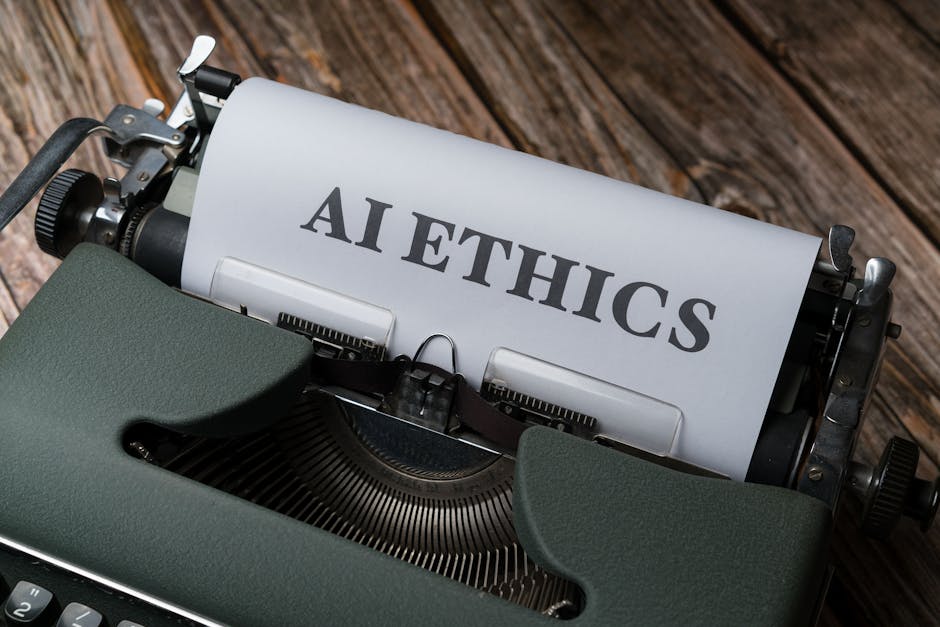
As we continue to integrate these technologies into our lives, we must ask ourselves how much influence we’re willing to cede to AI. The potential for transformative change is enormous, but so too are the ethical considerations. What happens when AI begins making decisions for us?
With all that’s happening, one thing is for certain: 2026 will be a pivotal year for AI. Companies will need to navigate the fine line between innovation and responsibility. As AI becomes more integrated into our daily devices, will we embrace the convenience or resist the encroachment on our autonomy? One thing is sure—the conversation around AI is only just beginning. What’s your take on this rapidly evolving landscape?
💬 Join the Conversation