
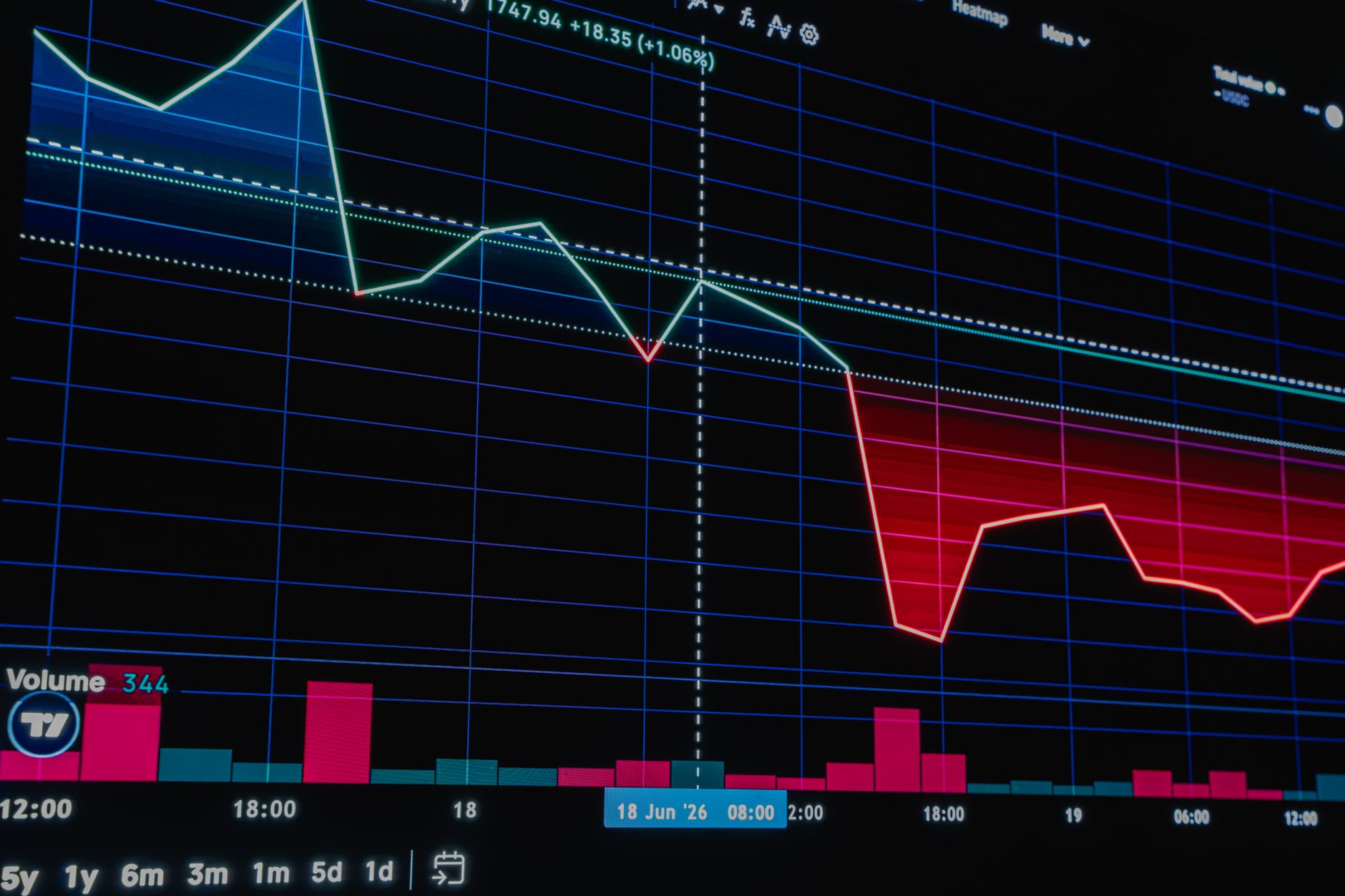
As we step into October 2026, the economic landscape in the United States tells a story of both resilience and concern. While the growth figures seem to offer a glimmer of hope, a closer look reveals cracks that could signal a looming challenge. The U.S. current-account deficit has swelled, and market volatility is creeping back into our financial conversations. Are we on the brink of a significant economic shift?
According to the U.S. Bureau of Economic Analysis, the current-account deficit widened by a staggering $33.4 billion, now reaching a hefty $246.0 billion for the second quarter of 2026. This marks a 15.7% increase from the previous quarter, raising eyebrows among economists. Increasing deficits tend to signal that the nation is borrowing more than it’s earning, a trend that can jeopardize long-term economic stability.
Additionally, bond yields have shot up, with the benchmark U.S. 10-Year Treasury Note hitting 5.3%, the highest level we’ve seen since June 2007. Meanwhile, the 30-Year U.S. Treasury Note climbed to 5.642%, a peak not witnessed since June 2002. Rising bond yields can often signify increased inflation expectations and a shift in investor sentiment, leading to higher borrowing costs for consumers and businesses alike.
Against this backdrop, the S&P 500 wrapped up the first trading day of October at 7,651.54, down 0.3%. Of the 11 sectors in the index, seven ended in the red, suggesting an overarching caution among investors. The Energy Select Sector SPDR (XLE) fell 0.9%, while the Utilities Select Sector SPDR (XLU) managed a modest gain of 1.2%. What do these fluctuations tell us about investor confidence?
In a climate where market volatility is again making headlines, the CBOE Volatility Index (VIX) rose by 1.9% to close at 16.34. This jump in the “fear gauge” indicates that investors are wary, with declining issues outnumbering advancers by a significant margin. With more than 18 billion shares changing hands on Wednesday, it’s clear that traders are on edge, weighing risks amid rising economic indicators.
Yet, there’s a silver lining. The Department of Commerce reports some favorable economic data that may mitigate concerns. The personal consumption expenditure (PCE) price index rose only 0.3% in August, a welcome surprise compared to the Zacks Consensus Estimate of 0.4%. Year-over-year, headline PCE inflation was up 3.4%, but still elevated compared to the Fed’s 2% target.
While personal spending increased by 0.9%, beating the forecast of 0.8%, personal income growth fell short, rising just 0.2% against an expected 0.5%. This discrepancy highlights a nagging concern: while consumers are spending, income growth isn’t keeping pace, potentially leading to future consumption challenges. The personal savings rate also plummeted to 4.1%, the lowest in months.
What does all of this mean for the average American? The juxtaposition of growth against a backdrop of rising inflation and an expanding deficit creates a complicated narrative. As consumers feel the pinch of rising prices and stagnant income growth, their ability to spend could wane, potentially stalling the economic momentum we’ve seen.
Looking ahead, investors and policymakers alike must navigate this tumultuous terrain with caution. While the economic indicators hint at a robust economy, the underlying issues could signal a significant shift in the months to come. Could we be witnessing the early stages of a bearish trend in consumer confidence and spending?
In all likelihood, these economic ripples will continue to affect global markets, and we must ask ourselves: are we prepared for what lies ahead? The intersection of household spending, inflation, and investment sentiment will be critical in shaping the U.S. economy’s trajectory. As we move deeper into Q4 2026, one thing seems certain: the road ahead may be more precarious than it appears.
💬 Join the Conversation