
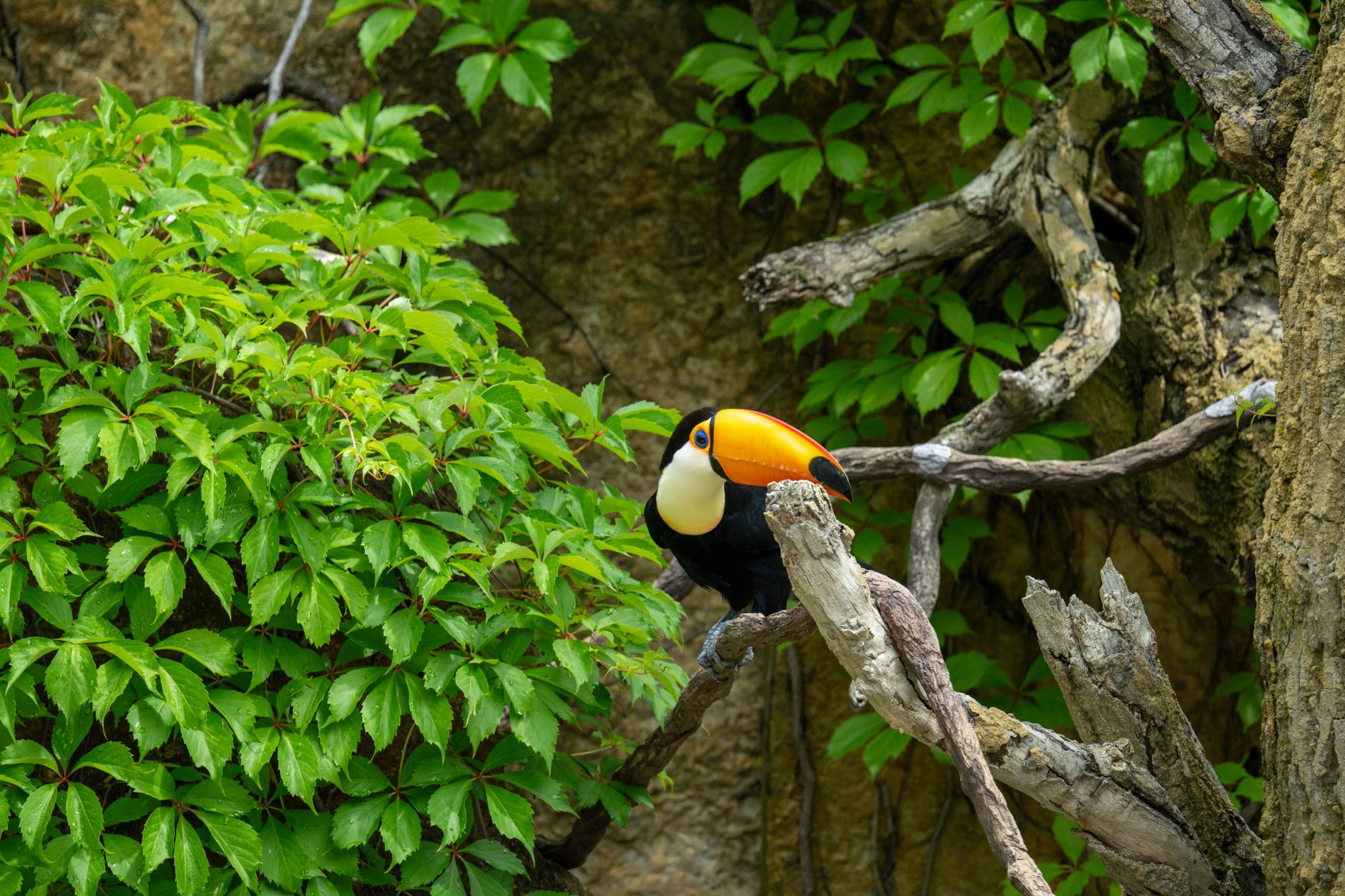
Imagine a vibrant toucan, its bright colors lit up by the sun, perched in a tree, only to realize it has lost its iconic beak. This was the unfortunate reality for a toucan named “Tico,” who found himself in dire need of a solution after a tragic accident left him unable to eat properly. The incredible journey that led to Tico receiving a custom artificial beak has captivated animal lovers around the world and challenged the boundaries of veterinary medicine.
Tico’s tale began in a wildlife rehabilitation center in Brazil, where he was brought after suffering injuries that resulted in the loss of his beak. For a toucan, the beak is not just a striking feature; it plays a vital role in feeding, drinking, and social interactions. As you can imagine, losing it left Tico struggling to survive. The dedicated team at the center faced a daunting challenge: how could they help a bird that relies so heavily on one physical trait?
Through collaboration with veterinarians and experts in 3D printing technology, a solution finally emerged. They set out to create a custom-made artificial beak designed specifically for Tico’s needs. This process involved creating a detailed scan of his mouth and the surrounding areas, ensuring that the new beak would fit seamlessly and allow him to eat and socialize once again. The use of flexible materials and advanced technology not only made it functional but also maintained a semblance of Tico’s original appearance, which is vital for his wellbeing.
The heartfelt moment when Tico first tried on his new beak was nothing short of miraculous. The rehabilitation team watched eagerly as he adjusted to this new device. With some encouragement, Tico began to eat again, eliciting cheers and applause from the staff who had poured their hearts into this project. It was a testament to what can be achieved when innovation meets compassion.
This incredible story raises important questions about the role of technology in wildlife rehabilitation. As advancements in 3D printing and veterinary medicine continue to evolve, how far are we willing to go to help animals in need? Tico’s case illustrates the profound impact that modern science can have on the lives of vulnerable creatures. It serves as a reminder that the intersection of empathy and technology can lead to groundbreaking solutions.
But is this the future of wildlife care? Will we soon see more animals receiving custom prosthetics to enhance their quality of life? Some experts believe that Tico’s success could pave the way for similar projects, potentially changing the landscape of animal rehabilitation forever. As artificial limbs and devices become more sophisticated, we might find ourselves in an era where no animal should suffer due to injuries that could otherwise be treated with technology.
Beneath this fascinating story lies an even deeper message about the responsibilities we hold toward our environment and the creatures that share it with us. It compels us to consider the ethical implications of wildlife conservation and the lengths we should go to ensure that animals like Tico not only survive but thrive.
So, what does this mean for the future? As we celebrate Tico’s recovery, let’s also ask ourselves: Is it time for animal rehabilitation centers worldwide to adopt these groundbreaking technologies? Should we push for more innovation in animal care? The answers to these questions could define the future of how we treat and protect our wildlife. What do you think?
💬 Join the Conversation